

close
Choose Your Site
Global
Social Media
Views: 0 Author: Site Editor Publish Time: 2026-10-18 Origin: Site


You secure a heavy load with premium high-tensile PET banding, only to have the joint snap in transit. I see this happening on loading docks constantly. Warehouse managers invest heavily in top-tier strapping, yet the load arrives unsecured because the seal point failed. The packaging industry relies on a critical metric known as joint efficiency. Even if a pristine band boasts a break strength of 1,000 pounds, a compromised seal can slash that capacity by half or more. Ultimately, the chain is only as robust as its weakest link.
Resolving this costly issue requires looking beyond the strap itself. By closely examining operator technique, the exact type of hardware used, and the precise calibration of your automated equipment, you can eliminate these frustrating failures. This guide walks you through the anatomy of a perfect seal and the hidden operational missteps that cause them to break.
Joint Efficiency Matters: A top-tier band is rendered completely ineffective if the seal point retains merely forty to fifty percent of the strap maximum breaking strength.
Friction Welding Calibration: Incorrect heating cycles or inadequate cooling times on your equipment remain the primary technical culprits for friction weld failures.
Hardware Mismatches: Utilizing incorrect sizes or inappropriate types of metal clips leads to micro-tears, severe slippage, and sudden tension loss.
Tool Maintenance is Crucial: Degraded tooth plates, worn grippers, or dirty tension wheels directly compromise the mechanical integrity of the joint.
Cooling Time is Non-Negotiable: Releasing the tension before the melted polymer fully solidifies will instantly shatter the molecular bond of the joint.
Recent logistics data highlights a massive shift from traditional steel banding to high-strength plastic alternatives. Supply chain managers are chasing significant cost savings, shock absorption capabilities, and improved workplace safety. However, this rapid transition exposes a critical knowledge gap regarding polymer sealing techniques. With global shipping volumes surging and automated packaging lines running faster than ever, the demand for flawless joint efficiency has never been higher. Consequently, poorly executed joints currently cost the shipping sector millions in transit damages annually, forcing facilities to upgrade their application methods.
To accurately diagnose why a band breaks at the joint, we must first understand the mechanical and chemical processes that create the seal. Different tools utilize entirely different engineering principles to secure the load.
Friction welding serves as the gold standard for automated and semi-automated packaging lines. During this process, a strapping tool overlaps the two ends of the band. The motor then oscillates the top strap against the bottom strap at an exceptionally high frequency. This rapid vibration generates intense localized friction, raising the temperature of the plastic to its melting point, typically around 250 to 260 degrees Celsius.
As the temperature peaks, the polymer chains of the two straps melt and intertwine. Once the vibration halts, the plastic cools and solidifies into a single unified piece. A healthy friction weld displays a consistent weld footprint. You should look for even edges and a slight uniform bleed of melted polymer along the sides, indicating a deep molecular bond.
In contrast to automated heat sealing, manual strapping processes rely entirely on mechanical force. Operators use a tensioner to pull the strap tight, followed by a sealer tool to crimp a metal clip over the overlapping ends. Because this specific plastic is exceptionally hard and glossy compared to softer materials, standard smooth clips simply cannot hold the tension.
Instead, this manual process demands specialized serrated metal accessories. When the manual sealing tool crimps the metal, internal serrated teeth bite aggressively into the surface of the strap. The grip must be perfectly distributed across the surface area. Should the crimping force be applied unevenly, those sharp teeth will slice entirely through the plastic, creating an immediate and critical weak point.
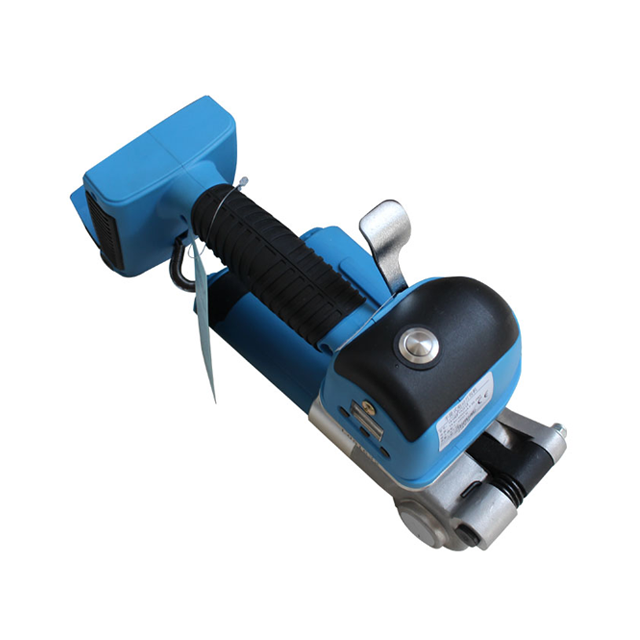
When utilizing automated or battery-operated equipment, the most frequent cause of seal breakage is improper calibration of the weld timer. The strapping material is a thermoplastic polymer, meaning its molecular structure changes drastically based on temperature exposure. Dialing in the optimal settings on your electric PET strapping machine is the absolute first line of defense against transit failures.
Over-welding occurs when the friction cycle runs for too long. Excessive heat breaks down the molecular chains of the plastic, transitioning the material from a strong oriented state into an amorphous brittle state. An over-welded joint often looks messy, flattened, and severely scorched. When a heavy pallet shifts during transit, this brittle degraded plastic cannot absorb the kinetic shock. As a direct consequence, the strap snaps cleanly right at the edge of the weld.
Conversely, under-welding happens when the vibration cycle is cut too short. The friction generates just enough heat to melt the very surface of the straps but fails to allow the polymer chains to deeply intertwine. This results in a superficial surface bond that looks acceptable to the naked eye but lacks structural integrity. Under heavy tension, an under-welded joint will simply peel apart like a sticky note, leaving the strap ends intact but entirely disconnected.
Actionable Calibration Tip: Weld times must be adjusted based on the specific thickness and width of the strap you are currently running. Thicker straps naturally require slightly longer weld times. Operators should conduct test welds at the beginning of each shift. Start with a lower weld time and increase it in micro-increments until the joint shows a slight even polymer bleed without excessive flattening.
Even if the welding time is perfectly calibrated, human error during the cooling phase routinely destroys joint efficiency. Picture a fast-paced loading dock where operators are rushing to secure the final pallet before a truck departs. In this environment, patience is scarce, and this specific issue is frequently misdiagnosed as a defective strap or a malfunctioning machine.
Immediately after the vibration cycle finishes, the overlapping layers remain in a semi-liquid molten state. The polymer chains require a brief but vital window to realign and solidify to regain their tensile strength. During this critical phase, the joint is highly vulnerable to any physical disturbance.
A common operator mistake is pulling the tool away or releasing the tension mechanism the exact millisecond the welding motor stops. This abrupt twisting movement causes the two layers of semi-liquid plastic to micro-shift against each other. This invisible shifting disrupts the molecular bond before it has a chance to harden, permanently reducing the joint strength by up to fifty percent. Facility managers must enforce a strict two to three-second cooling phase after the weld cycle completes to ensure maximum structural integrity.
For operations that rely on manual or semi-manual strapping, the physical hardware used to secure the joint is a primary suspect when straps break. Using incompatible accessories guarantees failure under heavy industrial loads.
Precision is critical when matching strap width to seal width. If an operator mistakenly grabs an oversized clip for a narrower strap, the crimping tool cannot fold the metal tightly enough around the plastic. This lack of compression leads to severe slippage the moment the pallet is lifted. On the flip side, forcing a small clip onto a wider strap causes the metal edges to crush and tear the sides of the band during crimping, creating immediate stress fractures that will fail in transit.
A critical error in warehouse logistics is confusing accessories meant for softer plastics with those meant for high-tensile rigid bands. Because this material has a highly rigid and glossy surface, it strictly requires specialized plastic steel strapping seals. These specific seals feature an interior lining of sharp staggered metal teeth. When crimped, these teeth penetrate the hard surface to lock it firmly in place. Attempting to use smooth metal clips will inevitably result in the band slipping out of the joint as soon as tension is applied.
Mechanical degradation of the strapping tool itself is a silent contributor to weak seals. A PET strap sealing tool that is neglected cannot apply consistent pressure or vibration, leading to erratic joint efficiency across your packaging line.
In a friction welding tool, the gripper plate sits at the bottom and holds the lower strap stationary while the top strap vibrates aggressively against it. Over thousands of packaging cycles, the sharp ridges on this plate naturally become dull. When the plate loses its grip, the bottom strap begins to slide along with the top strap during the weld cycle. This lack of relative friction means adequate heat is never generated, resulting in a weak under-welded joint that peels apart easily.
The very nature of heavy-duty strapping generates microscopic plastic dust as the band is pulled forcefully through the tool. Over time, this white dust accumulates heavily in the grooves of the tension wheel and the welding mechanism. A clogged tension wheel slips against the strap, failing to achieve the desired tension level. Furthermore, debris trapped in the welding area prevents the tool from applying uniform downward pressure, causing uneven melting and compromised seals.
There is a prevalent yet dangerous misconception in load securement that tighter always equates to better. In reality, applying excessive tension alters the physical properties of the strap and places disproportionate unnecessary stress on the seal.
Every strap possesses an elastic limit, which is the maximum amount it can stretch and still return to its original shape. If an operator sets the tension dial too high, the strap is stretched past its yield point into a state of plastic deformation. At this stage, the strap loses its shock-absorbing capabilities and becomes completely rigid, much like an over-tightened guitar string.
When a rigid load, such as steel pipes or concrete blocks, shifts slightly during transit, the impact generates a massive shockwave through the strapping. Because the over-tensioned strap has no elasticity left to absorb the impact, all of that kinetic energy is transferred directly to the weakest point. The joint will snap instantly under the pressure. Industry standards highly recommend tensioning the strap to approximately seventy to eighty percent of its maximum breaking strength to leave enough elastic reserve for absorbing sudden shocks.
Sealing Method | Average Joint Efficiency | Primary Advantage | Common Failure Risk |
|---|---|---|---|
Friction Welding (Automated) | 75% - 85% | High speed, zero consumable clip costs, highly consistent. | Improper timer calibration leading to over/under welding. |
Metal Crimping (Manual) | 60% - 70% | Low initial equipment cost, ideal for remote or outdoor sites. | Using smooth clips instead of serrated, leading to slippage. |
If your facility struggles with inconsistent joint efficiency despite rigorous staff training and hardware checks, the root issue often lies with outdated or unreliable equipment. Upgrading to modern technology removes many of the unpredictable variables that cause seal failures. When evaluating new machinery, prioritize features that guarantee mechanical consistency.
First, look for tools with robust tension capabilities that match your load requirements. Industrial-grade automated tools typically feature adjustable tension forces ranging from 400N up to 3200N. This wide range allows operators to dial in the exact force needed for different strap thicknesses, ensuring you never push the band past its yield strength.
Second, prioritize automated cooling timers and lock-out mechanisms. The best tools feature an electronic lock or indicator that physically prevents the operator from removing the tool until the cooling phase is entirely complete. This single engineering feature eliminates the risk of premature tension release and micro-shifting.
Finally, insist on brushless motor technology powered by high-capacity lithium batteries, typically 14.4V or 18V systems. Older tools use brushed motors that wear down over time, providing inconsistent vibration frequencies as they age. Brushless motors deliver exact repeatable friction cycles, ensuring a perfect weld footprint on every single use.
When a strap breaks on the warehouse floor, quick diagnosis is essential to prevent a shipping backlog. Use this systematic checklist to identify and resolve the root cause immediately.
Step 1: Inspect the Broken Seal. Do not throw the broken strap away; examine it closely. If it peeled apart smoothly, you are dealing with an under-weld. If it snapped at the edge and looks burnt or brittle, it is an over-weld. If the metal is actively slicing the plastic, reduce your manual crimping force.
Step 2: Verify Hardware Compatibility. Ensure you are not using smooth metal clips on a rigid band. Switch immediately to heavily serrated steel seals. Additionally, verify that the width dimensions of the seal match the strap exactly to prevent slippage or edge-crushing.
Step 3: Check Tool Cleanliness. Inspect the machinery for a buildup of white plastic dust on the tension wheel or tooth plate. Blow out the internal mechanism with compressed air and scrub the gripper plates with a brass wire brush to restore traction.
Step 4: Assess the Cooling Protocol. Observe your operators in action. If they pull the tool away immediately after the motor stops whining, intervene and enforce a mandatory wait time before releasing the tension mechanism.
Step 5: Evaluate Tension Levels. Pluck the secured strap. If it is stretched so tight that it feels like a rigid wire with zero give, dial back the machine tension setting to restore its shock-absorbing elasticity.
A high-tensile strap is only as reliable as the seal that holds it together. Breakage during transit is rarely the fault of the strap itself. Instead, it is usually a symptom of improper friction welding, mismatched hardware, or operator haste on the loading dock. By standardizing your warehouse procedures, enforcing mandatory cooling times, and properly maintaining your equipment, you can drastically improve joint efficiency.
If your current setup is causing bottlenecks and damaged loads, it is time to upgrade your securement hardware. Equipping your team with reliable automated machinery and the correct serrated seals ensures that your heavy loads remain perfectly secure from your warehouse all the way to their final destination. To explore professional-grade strapping equipment and accessories tailored to your operational needs, visit petpackingstrap.com and optimize your packaging line today.
Joint efficiency refers to the percentage of the strap original breaking strength that is retained at the seal point. In material science and packaging engineering, an ideal friction weld should consistently achieve between seventy-five and eighty-five percent joint efficiency. For example, if your band has a maximum break strength of 1,000 pounds, a properly executed weld will withstand 750 to 850 pounds of force before failing. Manual metal seals typically offer slightly lower efficiency, generally hovering between sixty and seventy percent.
A messy, excessively melted joint is the classic visual indicator of over-welding. This occurs when the equipment timer is set too high, causing the machine to generate friction for too long. When the plastic is subjected to excessive heat, its polymer chains degrade, and the molecular structure becomes highly brittle. Instead of forming a strong cohesive bond, the plastic loses its tensile strength and will easily snap when subjected to stress. Resolving this requires immediately decreasing the weld time on your equipment.
No, you cannot use standard smooth metal seals on rigid strapping. Traditional metal clips are designed for softer, more pliable materials. High-tensile plastic has a highly rigid and hard surface. To secure it manually, you must use specific serrated seals featuring an internal pattern of sharp metal teeth that physically bite into the hard plastic matrix when crimped. If you attempt to use a smooth seal, the strap will simply slide out of the joint as soon as tension is applied.
The frequency of maintenance depends entirely on the volume of your packaging operations, but a proactive approach is always best. For high-volume facilities running hundreds of cycles per day, basic cleaning should occur daily. This involves using compressed air to blow out the highly abrasive plastic dust that accumulates in the motor housing. On a weekly basis, technicians should use a stiff brass wire brush to aggressively clean the tension wheel and the gripper tooth plates, ensuring the tool can grip the strap securely during every weld.
An over-tensioned strap will feel completely rigid, much like a tightly wound guitar string, with absolutely no flex or give when plucked. Visually, you might see the edges of the strap beginning to thin or turn slightly white, indicating plastic deformation. If the strap snaps instantly when a forklift slightly jolts the pallet, it means the band was stretched past its elastic limit and had no shock-absorbing capacity left.
Polypropylene (PP) is a softer, more elastic material typically used for lighter loads, meaning it can be secured with smooth metal clips or lower-temperature heat seals. Polyethylene Terephthalate (PET) is engineered for heavy-duty industrial loads. It is much harder, stiffer, and requires significantly higher friction temperatures to weld. When sealing manually, it strictly requires heavy-duty serrated clips to penetrate its tough exterior, whereas PP does not.


