

close
Choose Your Site
Global
Social Media
Views: 0 Author: Site Editor Publish Time: 2026-10-21 Origin: Site


Upgrading to a fully automatic strapping machine represents a massive investment toward optimizing warehouse operations. You expect blistering throughput and seamless efficiency. Yet, I constantly see facility managers standing over a stalled, expensive arch machine, pulling out mangled plastic. The true performance of that high-end machinery hinges entirely on one seemingly simple consumable: the strapping material itself.
When sourcing a standard polyester packing strap, procurement teams hit a critical crossroad. Do you run embossed or smooth variants? Both originate from the exact same extruded polymer resin. However, their surface texture drastically alters how the material interacts with feed rollers, tensioning wheels, and friction-welding heads. Making an uninformed choice here triggers a cascade of operational headaches. You will face relentless machine jams, excessive plastic dust accumulation, weak joint seals, and crippling downtime. In this engineering deep dive, we will unpack exactly what shifts on an automated line when you toggle between these two textures. This knowledge empowers you to lock in the most reliable and cost-effective solution for your specific equipment.
Global e-commerce volume continues to surge at unprecedented rates. Modern logistics centers are under immense pressure to maximize daily throughput. We are seeing a distinct industry shift toward hyper-automated packaging lines where human intervention is strictly minimized. In these high-stakes environments, consumable compatibility is no longer an afterthought.
Facilities are increasingly prioritizing packaging materials that guarantee continuous uptime over those that merely offer the highest raw break strength. A machine that straps 60 pallets an hour cannot afford a sensor failure caused by plastic dust. Consequently, the nuanced mechanical grip and dust-reduction properties of specific strapping textures have become a focal point. Preventative maintenance programs across the logistics sector now heavily factor in consumable texture to keep lines moving flawlessly.
Before diving into complex machine mechanics, we must objectively understand the physical differences between these two variations. Both begin their lifecycle as melted polyethylene terephthalate resin. Their secondary finishing processes dictate their final physical behaviors on the warehouse floor.
This variant features a tactile, diamond-like or waffle pattern pressed deep into the surface during the extrusion process. Think of it like the tread on a heavy-duty tire. Heavy steel rollers stamp this specific pattern into the hot plastic. This intentional design increases the strap's surface area while introducing a slight degree of flexibility. For example, a standard 16mm by 0.8mm embossed PET strapping coil delivers excellent elongation recovery of around 10 to 12 percent. It acts as an industrial shock absorber, making it highly compatible with sensitive machinery and shifting loads.
Just as the name implies, this alternative resembles a flat, glossy ribbon with absolutely no surface texture. Because it bypasses the secondary compression of a stamping roller, the polymer retains a higher density and structural rigidity. Without microscopic peaks and valleys, a flat strap contains slightly more plastic mass per square millimeter. This fundamental physical trait gives it a higher raw tensile break strength compared to a textured strap of the exact same width and gauge. A smooth 16mm strap might push a breaking strength of over 500kg, making it a brute-force solution.
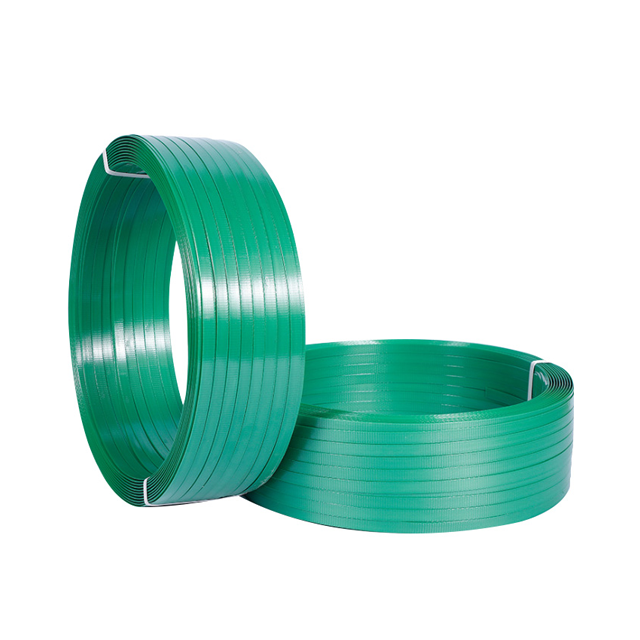
For a fully automatic strapping system to remain profitable, continuous operation is mandatory. The exact way your material travels through the machine's arch dictates your daily downtime metrics.
In high-speed automated lines, the strap shoots through the track at rapid velocities. The machine relies on motorized polyurethane or steel feed rollers to push the material around the arch and pull it back tightly. The tactile surface of an embossed strap provides a high coefficient of friction against these rollers. This enhanced mechanical grip ensures the plastic is pushed and pulled precisely according to the machine's microsecond timing sequence. It drastically reduces the likelihood of curling, twisting, or misfeeding as it whips around the corners.
In contrast, flat straps lack that built-in mechanical tread. Industrial strapping machines are certainly engineered to handle glossy surfaces, but the margin for error shrinks considerably. The feed and tensioning rollers must be perfectly calibrated by a technician. If the roller tension is dialed in too loosely, the smooth PET strapping will inevitably slip during the rapid retraction phase. The machine will time out. Conversely, if the feed wheels are cranked down too tightly to compensate for the lack of grip, they can crush or score the strap. This leads to fatal tracking errors deep inside the machine head.
Once the material successfully navigates around the pallet, the automated unit must pull it to the designated tension and seal the overlapping ends. Modern automated lines utilize friction welding. This is a violent process where the machine rubs the two ends together at high oscillation speeds to melt the polymer and fuse it permanently.
The physics of friction welding change entirely depending on the surface area in contact. The textured peaks and valleys of an embossed strap create localized, concentrated points of high friction. When the welding mechanism clamps down and oscillates at thousands of cycles per minute, these raised peaks generate intense heat almost instantly. They melt quickly and evenly, flowing into the microscopic valleys to create a highly consistent weld. Because the melting point is reached faster, the equipment requires slightly less energy and a shorter weld timer setting.
Flat surfaces demand a different welding dynamic. The area is entirely flush, so it takes a fraction of a second longer for the broad surface-area friction to generate enough heat. When properly welded, a glossy strap creates an incredibly robust joint. However, the machine's gripping teeth must be in pristine condition. If these friction plates are worn dull from extensive warehouse use, they will simply slide over the glossy finish. This results in a superficial cold weld that is highly susceptible to snapping apart during transit.
One of the most persistent enemies of automated packaging lines is the generation of polymer dust. Evaluating your consumable's texture is a fundamental step in proactive facility maintenance.
Picture a tensioning wheel spinning rapidly against a stalled plastic band. It essentially acts as a high-speed sander. Over thousands of strapping cycles, slipping rollers shave off microscopic layers of the polyester material. This creates a heavy, snow-like buildup of fine white dust deep inside the mechanical head. This debris works its way into sealed bearings, blinds optical sensors, and clogs moving gears. It inevitably leads to phantom misfeeds and expensive mechanical breakdowns.
Textured variants inherently reduce roller slippage. Significantly less plastic is shaved off during the tensioning phase. This results in a much cleaner machine head and extends the intervals between mandatory maintenance blow-downs. On the flip side, glossy straps are highly prone to micro-slippage during high-torque tensioning. Facilities utilizing flat materials on high-speed lines must implement rigorous cleaning schedules to prevent dust-related sensor failures.
Feature Matrix | Embossed PET Strap | Smooth PET Strap |
|---|---|---|
Machine Roller Grip | Excellent. Tread pattern prevents micro-slippage. | Moderate. Requires precise roller tension calibration. |
Dust Generation | Very Low. Protects optical sensors and bearings. | High. Demands frequent mechanical blow-downs. |
Tensile Strength | Standard. Adequate for 90 percent of general loads. | Maximum. Superior raw breaking strength. |
Friction Welding Speed | Fast. Peaks melt instantly under oscillation. | Slower. Requires longer weld timer and sharp teeth. |
Elongation Recovery | High. Absorbs kinetic shock from transit bumps. | Low. Highly rigid with virtually zero stretch. |
Beyond machine compatibility, your choice of texture directly dictates the safety of your product as it endures the vibrations of the global supply chain. It also impacts your bottom line.
Because the stamping process introduces a slight degree of flexibility, textured straps boast excellent elongation recovery. If a load shifts, settles, or expands during transit, the strap acts like an industrial-strength rubber band. When securing compressible loads like corrugated cardboard boxes, stacked timber, or agricultural produce, this is vital. If a forklift bumps a pallet, the strap stretches slightly to absorb the kinetic shock, then aggressively snaps back to retain tight tension.
Alternatively, flat materials are engineered for maximum rigidity. When securing non-compressible, brutal loads, smooth strapping is the superior choice. If your facility bands steel coils, heavy concrete pavers, glass panels, or raw metal extrusions, the glossy finish ensures the load remains absolutely locked in place.
From a procurement standpoint, yield per coil is a massive factor. The stamping process physically presses a pattern into the plastic, effectively stretching and displacing the polymer mass. A coil of textured strapping generally yields significantly more meters of material per kilogram than a flat coil of the exact same weight. Switching to a textured variant immediately lowers your cost-per-strapped-pallet. Furthermore, warehouses implementing colored PET strapping for visual inventory routing often favor the textured variant. It maintains this high yield while diffusing overhead warehouse lighting, making the color coding highly visible from a distance.
To summarize, what actually changes on your automatic packaging line when you switch textures? Everything from preventative maintenance schedules and machine uptime to load security and the baseline cost per package.
Opt for Embossed Strapping if:
You run high-speed, fully automatic arch machines and need zero misfeeds.
Your maintenance team is battling sensor-blocking plastic dust.
You package compressible loads like wood, paper goods, or corrugated boxes.
You want to maximize the length of material per coil for a sharper ROI.
Opt for Smooth Strapping if:
You secure ultra-heavy, rigid loads where maximum tensile strength is non-negotiable.
Your product requires absolute zero-stretch containment like steel or concrete.
Your maintenance technicians strictly calibrate the machinery to handle glossy surfaces.
Optimizing your packaging line is not just about cutting a check for the fastest automated machine on the market. It is about feeding that machine the correct materials. While both glossy and patterned variations have distinct mechanical advantages, textured strapping stands out as the most versatile, machine-friendly, and cost-effective option for the vast majority of high-speed automated lines. If your floor operators are battling frequent machine jams, superficial welds, or high maintenance downtime, it is time to audit your consumables. Run a trial on your automated line to witness the operational difference firsthand. To explore high-quality materials engineered specifically for your equipment, visit petpackingstrap.com and connect with our engineering team for a tailored packaging solution.
In most scenarios, yes. However, you will likely need a technician to adjust the tensioning rollers, feed wheels, and weld timers. Textured straps sit slightly thicker in the chute due to the stamped pattern and require less friction time to melt. Always consult your machine service manual before executing a material switch to ensure proper calibration.
Technically, yes. Because the stamping process slightly alters the solid density of the polymer, a flat strap will yield a higher break strength than a textured strap of the exact same width and thickness. However, for 90 percent of standard warehouse shipping applications, the textured strap is more than robust enough to secure the load safely.
Arch jams are typically triggered by three main culprits: excessive polymer dust buildup blinding the optical sensors, worn-out polyurethane feed rollers slipping against the plastic, or using a cheap strap with severe lateral curve. Upgrading to a high-quality textured strap can often resolve grip and dust issues immediately.
Yes, it often requires lower tension settings on the feed rollers compared to smooth straps. The textured surface naturally provides better grip. If you leave the roller tension cranked up high from a previous smooth strap setup, the machine may over-grip and crush the embossed pattern, leading to feeding errors.
The fastest way to reduce plastic dust is to switch from a smooth strap to an embossed strap. The textured surface prevents the tensioning wheels from slipping and grinding against the plastic. Additionally, ensure your feed rollers are clean and not worn down, as degraded rollers cause micro-slippage that generates heavy white dust.
On a strict per-kilogram purchasing basis, the raw prices are generally identical. However, textured variants are practically more cost-effective in everyday use. The manufacturing process yields more meters of material per coil, effectively lowering your consumable cost per pallet and boosting overall warehouse ROI.
Absolutely. Both flat and patterned polyester straps are engineered specifically to act as safe, cost-effective, and rust-proof alternatives to dangerous steel banding. They are widely adopted for medium-to-heavy duty load containment, offering comparable holding force without the severe laceration hazards associated with sharp steel edges.


