

close
Choose Your Site
Global
Social Media
Views: 0 Author: Site Editor Publish Time: 2026-10-31 Origin: Site


Imagine opening the trailer doors at a busy distribution center. You are immediately greeted by an avalanche of crushed cartons and scattered merchandise. The financial toll of such product damage costs logistics operations millions annually. Yet, the root cause is frequently overlooked. Wrapping a pallet might appear to be a straightforward warehouse task. Achieving genuine load stability, however, is a highly complex process. It requires the precise intersection of correct application techniques, an understanding of polymer physics, and the right materials.
As supply chain demands intensify, relying on outdated packaging methods is no longer viable. Implementing a high-quality industrial stretch film serves as your ultimate defense against transit damage. This holds true provided the material is engineered and applied correctly. This comprehensive guide will diagnose the most common wrapping failures. We will specifically analyze tearing and shifting from an engineering perspective. Furthermore, we will offer actionable solutions to optimize your packaging line.
Load shifting is typically caused by inadequate containment force or failing to anchor the load properly to the pallet base.
Film tearing frequently results from improper wrapping machine tension, sharp pallet corners, or utilizing an incorrect film gauge for the load profile.
Understanding the elastic recovery of the plastic is essential for keeping pallets tightly bound during violent transit vibrations.
Optimizing your wrapping Standard Operating Procedures SOPs can drastically reduce material usage and mitigate workplace ergonomic hazards.
Combining high-quality wraps with heavy-duty PET strapping offers enhanced structural protection for irregular or excessively heavy loads.
To effectively troubleshoot packaging failures, one must look beyond the surface. It is critical to understand the fundamental mechanics of the materials used. When applied with precision, these polymers do not merely cover a product. They engineer a dynamic structural hold based on advanced physics.
Most modern stretch wraps are manufactured from Linear Low-Density Polyethylene LLDPE. This specific polymer is celebrated for its elastic memory. Think of this material acting much like a giant, heavy-duty rubber band. As the film is mechanically stretched around a pallet, its molecular chains are forcibly elongated. Once the application is complete, the plastic naturally fights to shrink back to its original, unstretched state. This continuous inward pulling action generates the consistent squeezing pressure required to hold individual boxes together as a unified block. When the plastic loses this elastic memory, it acts more like rigid tape. It completely loses its ability to secure the load against sudden jolts.
Containment force is the absolute most critical metric in pallet wrapping. It represents the total squeezing pressure exerted by the film on the load. This is calculated by multiplying the wrap force by the number of film layers. If this force is too low, the boxes will inevitably shift during highway transit. If it is too high, the pressure may crush fragile corrugated cartons. Striking the perfect balance requires precise calibration of your wrapping equipment alongside the selection of an appropriate film gauge.
Recent analyses of supply chain logistics reveal a significant industry-wide pivot regarding pallet wrapping methodologies. Historically, warehouse managers relied on excessively thick, heavy-gauge plastics to guarantee load security. Today, driven by strict corporate ESG mandates and fluctuating petrochemical costs, the current trend heavily favors source reduction through advanced polymer engineering.
Logistics leaders are rapidly adopting multi-layer nano-extruded films. These highly engineered materials utilize dozens of microscopic layers compressed into a single, ultra-thin sheet. They deliver the puncture resistance of legacy thick films while slashing plastic consumption by up to thirty percent. This shift underscores a broader industry consensus. True load stability is no longer achieved merely by adding more plastic weight. It is achieved by leveraging scientifically optimized materials that balance environmental responsibility with uncompromising structural integrity.
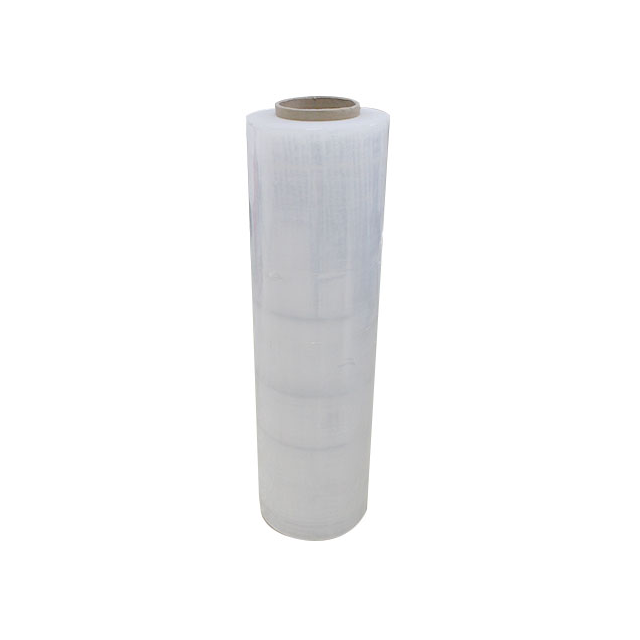
Frequent film tearing is a massive operational bottleneck. It halts production lines, frustrates forklift operators, and leads to significant material waste. Diagnosing the exact root cause requires a systematic evaluation of your machinery, the specific load profile, and the structural limits of the plastic itself.
Automated wrappers utilize pre-stretch carriages to elongate the plastic before it ever makes contact with the load. If the pre-stretch gears are calibrated to pull the material beyond its ultimate tensile strength, microscopic perforations begin to form. These invisible micro-tears rapidly propagate into massive, catastrophic breakdowns the moment the film is pulled tight against the pallet. Routinely auditing the pre-stretch carriage is essential. Operators should ensure the rubber rollers are entirely free of sticky resin buildup. They must also verify that the machine gear ratio perfectly matches the engineered specifications of the pallet wrapping film currently loaded.
Standard plastics are highly susceptible to puncture from jagged environmental hazards. Protruding wooden splinters on a Grade B pallet, sharp metal components, or irregularly stacked corrugated boxes create intense localized stress points. When the web is pulled tightly over these severe edges, it simply punctures and snaps. For loads exhibiting severe edges, transitioning to a highly puncture-resistant blown film is highly recommended. Alternatively, warehouse staff should manually apply rigid corner boards prior to the wrapping cycle. This effectively distributes the tension evenly across a flat, safe surface.
It is entirely possible for a shipment to arrive completely wrapped, yet entirely shifted off its wooden base. This specific failure occurs when the application methodology fails to account for the dynamic, violent forces of transportation. Sudden braking, rapid acceleration, and relentless road vibrations will expose any structural weakness.
The single most common error observed in both manual and automated processes is failing to physically lock the merchandise to the transport platform. If the plastic only encircles the cardboard boxes, the entire unitized block can easily slide horizontally off the base during transit. Machine programmers and manual operators alike must ensure that a minimum of two to three inches of the film rope catches the actual wooden or plastic base during the bottom wrap cycle. This critical step creates a high-friction anchor between the product and the pallet.
To weave a unified, structurally sound web, each rotation around the pallet must overlap the previous one. When this overlap becomes inconsistent or too narrow, the load containment stretch wrap develops weak horizontal bands across the load face. These bands create prime initiation points for shifting. Standardizing an overlap of at least fifty percent for every single rotation guarantees that every square inch of the load is protected by a minimum of two interlocking layers.
Accurately diagnosing why your loads shift and your materials tear is merely the first step in the optimization process. Executing a permanent, reliable solution requires sourcing the correct packaging components. Ultimately, the structural integrity of your outbound shipments relies entirely on the physical capabilities of the materials you choose.
To move away from abstract concepts, engineering teams must evaluate specific performance parameters. Below is a core comparison matrix to guide your procurement strategy.
Load Profile | Recommended Material | Key Engineering Specifications | Best Application Method |
|---|---|---|---|
Standard Uniform Loads | Cast Machine Stretch Film | Thickness: 17-25 microns. Width: 500mm. Stretch Rate: 200%-250%. | Automated Turntable Wrapper |
Heavy / Irregular Edges | High-Performance Blown Film | Thickness: 25-30 microns. High puncture resistance. | Semi-Automatic Wrapper |
Extremely Heavy / Rigid | PET Strapping + Stretch Film | Strap Width: 12-19mm. Strap Thickness: 0.6-1.0mm. High Tensile Strength. | Pneumatic Tensioner + Wrapper |
Specifically, for high-volume automated lines, utilizing a machine stretch film with a standard width of 500mm and a thickness ranging from 17 to 30 microns ensures optimal yield. Premium formulations can comfortably achieve a 250% to 300% stretch rate. This capability directly lowers the cost per pallet while maintaining robust containment force.
While high-quality wrapping materials are more than sufficient for standard corrugated boxes, they are not a universal fix for every logistics challenge. For operations handling incredibly heavy, rigid, or expanding loads, plastic film alone simply lacks the rigid tensile strength required to prevent internal macro-shifting. This includes materials like construction lumber, concrete blocks, steel pipes, or heavy machinery.
In these extreme scenarios, a dual-layer security approach is absolutely necessary. Facilities must first physically secure the raw items directly to the pallet base using high-tensile PET strapping. This heavy-duty polyester strapping acts as the primary structural skeleton of the load. It offers steel-like holding strength without the associated risks of rust or sharp, dangerous edges. Once the heavy merchandise is firmly locked down by the strapping, the entire pallet is then wrapped in film to provide the essential secondary benefits of moisture protection, dust containment, and tamper evidence.
Achieving optimal load stability while aggressively minimizing material waste requires a highly systematic approach. By implementing empirically backed strategies, facilities can streamline their packaging lines and significantly lower operational overhead.
Before executing any sweeping operational changes, establishing a solid baseline is imperative. A comprehensive load containment audit involves utilizing a specialized pull-plate tool to measure the exact squeezing pressure currently exerted on the top, middle, and bottom tiers of your typical pallets. Comparing these precise readings against established industry standards will instantly reveal whether your team is over-wrapping and wasting plastic, or under-wrapping and risking catastrophic shifts.
Automated wrappers rely on complex pre-stretch carriages moving at varied speeds to stretch the web before it touches the merchandise. Over thousands of cycles, these gears inevitably wear down. The rubber rollers accumulate friction-killing dust and resin buildup, causing the actual stretch ratio to plummet. A machine digitally set to 250% pre-stretch might only be delivering 150% in reality if left uncalibrated. Implementing a strict monthly maintenance schedule to clean rollers and verify gear ratios is crucial.
The absolute most critical point of failure for any palletized shipment is the junction located between the bottom tier of products and the wooden pallet itself. To prevent the entire load from sliding off during a truck braking maneuver, operators should utilize a roping technique. This involves intentionally narrowing the film web into a thick, concentrated cable and wrapping it tightly around the wooden base and the first tier of boxes. This creates an immensely strong, unyielding anchor point without requiring excessive layers of full-width plastic.
Pallet load shifting and frustrating film tearing are not inevitable costs of doing business. They are highly preventable symptoms stemming from poor material choices, incorrect application techniques, or severely uncalibrated machinery. By taking the time to understand the physics of elastic recovery and containment force, warehouse managers can completely transform their outbound logistics operations.
Investing in the correct, high-performance materials directly protects your valuable merchandise while simultaneously keeping your floor workers safe from ergonomic injuries. We highly encourage operations leaders to conduct a thorough audit of their current wrapping processes today to identify areas of unnecessary waste. Are you ready to eliminate transit damage and optimize your packaging costs? Explore our full range of engineered solutions at PET Packing Strap to find the exact industrial packaging materials and high-tensile strapping that match your operational demands.
Pre-stretched film is mechanically elongated at the manufacturing facility before being wound onto the roll. This process makes the material significantly easier for manual warehouse application, requiring far less physical exertion from the operator to achieve a tight hold. Standard film relies entirely on the operator physical pull or the automated wrapping machine carriage to stretch the material upon application to achieve the necessary containment force.
The optimal containment force depends entirely on the specific weight and physical profile of your load. Extremely light and uniform loads typically require only 2 to 5 lbs of squeezing force to remain stable. Conversely, heavy, highly unstable, or irregularly shaped loads may demand anywhere from 10 to 20+ lbs of holding force to remain secure during turbulent highway transit.
Bottom-layer breaks are predominantly caused by severe environmental friction points, such as sharp, splintered corners on wooden pallets or protruding nails. Additionally, if an automated machine carriage tension is set too aggressively during the initial anchoring rotation, the plastic will instantly snap upon contact with the rigid, unforgiving pallet base.
For uniform, lighter loads packaged within standard corrugated boxes, wrapping is generally sufficient on its own. However, for exceptionally heavy, rigid, or expanding loads like raw lumber or bricks, you must utilize high-tensile PET strapping to structurally secure the items first. The wrap should only be applied afterward to protect against environmental elements like dust and moisture.
There is no universal number of layers, as it depends on the film gauge, machine pre-stretch settings, and load weight. However, a standard engineering baseline suggests a minimum of three wraps at the bottom base to create a secure anchor, two to three layers ascending the body with a fifty percent overlap, and two to three wraps at the top to secure the upper tiers. Heavy loads will require additional rotations to meet the required containment force.
Engineers and quality control teams utilize a specialized pull-plate tool paired with a digital force gauge. The plate is inserted behind the applied stretch film on the side of the pallet. The operator pulls the gauge outward by a standardized distance usually one to two inches. The digital scale then registers the exact pounds of containment force resisting the pull. This test should be performed at the top, middle, and bottom of the pallet to ensure uniform stability.


