

close
Choose Your Site
Global
Social Media
Views: 0 Author: Site Editor Publish Time: 2026-10-27 Origin: Site


Walk into any high-volume ginning facility. You will likely spot a familiar and dangerous problem. Expanded cotton bales sitting with slackened bands. Loose restraints consume valuable warehouse space. Worse, they create immediate safety hazards for forklift operators and floor staff.
Poor materials and shifting storage environments usually trigger this frustrating failure. Solving this problem permanently requires looking beyond just the packaging material. We must understand the mechanical forces at play. Modern agricultural logistics demand robust tension retention. The industry is rapidly shifting away from outdated steel ties toward high-elasticity polymers to meet these demands.
Material Matters: High-grade polyethylene terephthalate provides a unique elastic memory. This allows the band to expand and contract alongside the bale without losing its grip.
Application is Crucial: Proper friction welding via automated machinery guarantees joint structural integrity.
Environmental Control: Prolonged ultraviolet exposure and drastic temperature swings accelerate packaging degradation.
Safety First: Standardized handling protocols and strict warehouse audits drastically reduce workplace accidents.
Understanding the physical mechanics behind packaging failure is your first step toward a permanent fix. Cotton bales are highly compressed organic masses. They react constantly to environmental shifts. When a tie goes slack, it rarely happens overnight. It stems from a combination of material physics and suboptimal warehouse conditions.
Cotton fibers are inherently hygroscopic. They absorb and release moisture based on ambient humidity. During the initial baling process at the gin, the raw material holds a specific moisture level. If that bale sits in a dry storage facility for several months, the fibers dehydrate. This moisture loss shrinks the physical circumference of the package. As the bale compresses further, standard rigid bands are left with excess slack. This loose fit inevitably compromises stack stability.
In material science, creep refers to the tendency of a solid object to deform permanently under persistent stress. Highly compressed organic fiber pushes outward with massive force. Inferior plastics, such as standard polypropylene, suffer from exceptionally high creep rates. They stretch to accommodate the outward pressure. However, they lack the molecular structure to recover their original length. Once a standard plastic strap elongates, the deformation is permanent.
Storage environments directly impact molecular integrity. Extreme warehouse heat causes certain plastics to soften. This rapidly accelerates elongation. Conversely, storing inventory outdoors exposes it to direct sunlight. Ultraviolet radiation triggers photo-oxidation in the plastic. This chemical breakdown severs polymer chains. The restraint loses its tensile strength, turns brittle, and eventually snaps.
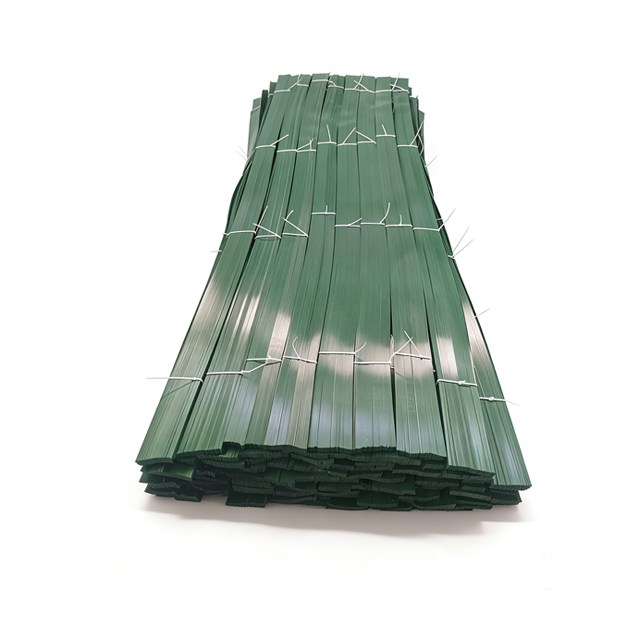
To combat the relentless forces of settling and material creep, the agricultural sector is upgrading. Recent market analyses reveal a definitive shift toward sustainable, high-tension solutions. Global supply chains simply cannot tolerate cargo failures. Facility managers now prioritize materials capable of handling dynamic load shifts. Consequently, modern gins are abandoning rigid metal ties. They favor high-elasticity polymers that promise zero rust and superior tension retention.
The defining characteristic of a premium cotton bale packing strap is its elastic memory. Unlike rigid steel wire, polyester behaves like an industrial-strength rubber band. When tensioned during application, it stretches slightly. This stretch usually falls between two and six percent. If the cotton shrinks due to dehydration, the elastic memory forces the plastic to retract. It maintains a relentless grip. If the load shifts during transport, the polymer absorbs the shock without permanently deforming.
Empirical data and rigorous safety audits consistently highlight superior performance in heavy-duty applications. Steel poses severe laceration risks and rusts easily. Polypropylene cannot hold massive expansive forces without stretching. The table below illustrates the stark differences.
Material Type | Elastic Recovery | Tensile Strength | Rust & Stain Risk | Safety Level |
|---|---|---|---|---|
Polyester | Excellent | Very High | Zero | High |
Steel Wire | None | Extreme | High | Low |
Polypropylene | Poor | Low to Medium | Zero | Medium |
Procuring the correct supplies requires looking closely at manufacturing specifications. Not all synthetic bands can handle the immense outward pressure generated by compressed agricultural goods. You must match the product parameters to your operational reality.
The core metric of any reliable restraint is its break load capacity. Heavy-duty dimensions are non-negotiable for the cotton industry. Straps utilized for this specific application typically measure 16mm or 19mm in width. Thicknesses should exceed 0.8mm, often reaching 1.0mm or 1.2mm for maximum security. A professional-grade band delivers a tensile break strength ranging from 400kg to over 800kg. This ensures the packaging withstands brutal handling impacts.
Inventory often sits in staging areas for a year or more. The packaging must endure prolonged exposure to warehouse lighting and incidental sunlight. Premium manufacturers integrate UV stabilizers into their extrusion process. These chemical treatments act as an invisible shield. They prevent polymer degradation over long storage cycles.
Buyers frequently debate between smooth and embossed textures. Embossed variants feature a diamond-patterned texture pressed directly into the plastic. This texturing provides a superior grip for the feed wheels of strapping tools. It significantly reduces slippage during the tensioning phase. For agricultural baling, heavily embossed textures are widely recommended to ensure jam-free machine operation.
Securing highly compressed products requires premium materials and precise application. Even the highest-grade polymer will fail if applied with incorrect tension or poorly sealed joints. Establishing a standardized operating procedure is your first line of defense.
Initial tension dictates how well the band performs as the package settles. Manual ratcheting tools are fundamentally inadequate for heavy-duty requirements. They rely entirely on human strength. This leads to wildly inconsistent pressure levels across different bales.
Facilities must utilize automated equipment to achieve uniform tension. Integrating a professional PET strapping machine into your packaging line ensures optimal tensioning. Every tie is pulled to its precise limit without exceeding the break load. Battery-operated friction weld tools offer excellent mobility for warehouse operators securing inventory in dynamic locations.
A slackened tie is frequently the symptom of a compromised seal. Metal buckles are highly prone to slippage under extreme expansion forces. Consequently, friction welding serves as the industry-standard sealing method.
Friction welding oscillates the two overlapping ends at a high frequency. This generates localized heat that melts the polymer chains together. Properly executed welds achieve a joint efficiency of up to ninety percent of the original tensile strength. Operators must strictly monitor the heating and cooling times programmed into their tools. Removing the machine before the brief cooling cycle completes will stretch the molten plastic. The result is a weak, peeling joint.
Long-term stability depends heavily on the surrounding environment. Warehouse conditions dictate the physical behavior of both the organic fiber and the synthetic packaging. Strict environmental controls maintain structural integrity.
Ambient humidity plays a massive role in storage success. Moving a bale from a humid environment to a dry warehouse causes moisture loss. The volume shrinks, leaving standard ties slack. Conversely, dry bales absorb excess humidity and swell rapidly. This puts immense outward pressure on the restraints.
Maintain stable climate conditions to mitigate these issues. Keep relative humidity between fifty and sixty percent. Industrial dehumidifiers and proper ventilation systems minimize drastic moisture fluctuations.
Warehouse space optimization frequently leads to towering vertical columns. Improper stacking practices severely compromise structural integrity.
Cumulative weight exerts massive crushing pressure on the bottom tier. Vertical compression forces the lower bales to bulge outward at the sides. This stretches the bands beyond their elastic recovery limit. Adhere to safe stacking heights based on bale density. Implement staggered stacking methods to distribute weight evenly.
High tension means the packaging holds a significant amount of kinetic energy. If a restraint fails or is severed improperly, that energy releases instantaneously. This poses severe safety risks.
Cutting a highly tensioned line causes the ends to whip outward at blinding velocities. This dangerous reaction is known as snap-back. It can cause deep lacerations.
Workers must wear appropriate protective equipment, including cut-resistant gloves and safety glasses. Personnel must never use standard pocket knives. Operators should rely exclusively on specialized safety cutters designed to direct kinetic energy away from the body.
Forklift operations account for a massive percentage of packaging damage. Heavy steel tines scraping against the side of a bale can easily sever the polyester bale banding. Even a microscopic abrasion creates a stress concentration point. This eventually leads to a complete rupture.
Drivers must approach loads squarely. Utilizing specialized bale clamps rather than standard forks drastically reduces mechanical damage. This ensures the cargo remains secure during transit to the shipping container.
Quality control audits occasionally reveal a loose band despite the best preventative measures. Addressing this issue promptly prevents the package from bursting and causing a dangerous cascade failure.
Facility managers must diagnose the failure before replacing the material. Conduct a thorough visual inspection.
Inspect the Weld: Did the friction weld pull apart? A separated weld indicates inadequate cooling time or a dirty sealing surface.
Check for Elongation: Does the plastic look significantly thinner than a new piece? This indicates material creep. The tensile strength was insufficient for the load.
Assess the Bale: Has the cotton noticeably shrunk? If the band is intact and the weld is secure, natural moisture loss caused the looseness.
Compromised ties must be replaced immediately. Never attempt to re-tension an already welded piece. Its molecular integrity is permanently altered.
Cut and remove the loose band carefully. Select a new, high-tensile strap meeting the required break load specifications. Apply the new band using a calibrated portable machine. Document the failure in the facility log to track potential material defects.
Securing highly compressed cotton demands durable materials and precision tools. Understanding the mechanical forces at play allows you to eliminate the dangerous issue of loose bands. Environmental control prevents tension loss over time. Routine inspections ensure facility safety and protect valuable inventory.
Upgrade your packaging operations today. Transitioning to professional-grade polymer solutions and automated machinery guarantees your harvest remains secure. For optimal performance and reliable material specifications, explore the advanced strapping solutions available at petpackingstrap.com. Equip your facility with the right tools for long-term storage success.
For high-density agricultural baling, industry standards dictate using a width of 16mm or 19mm. The thickness should be between 0.8mm and 1.0mm. These heavy-duty dimensions provide the necessary break load capacity to handle massive expansive forces.
Operators should aim for a working tension that is roughly forty to fifty percent of the strap's maximum break load. This specific range engages the elastic memory. It allows the material to absorb shocks and retract properly as the bale settles.
Reusing a strap that has already been tensioned and friction-welded is strongly discouraged for heavy loads. The initial tensioning process permanently alters the structural integrity. The plastic becomes unsafe for a second high-pressure application.
High-quality, UV-resistant material can last for several years in a climate-controlled indoor warehouse. In harsher outdoor environments, heavily UV-treated variants safely hold optimal tension for twelve to twenty-four months before requiring replacement.
Seal failure is predominantly caused by operator error during application. Common culprits include inadequate heating or cooling times during the friction welding process. Dirt interfering with the sealing surface also causes weak joints.
High-speed winds cause flat bands to vibrate violently on open flatbed trucks. Putting a single, deliberate twist in the line before securing it disrupts the aerodynamics. This effectively prevents the vibrating wind noise that causes severe friction wear.


