

close
Choose Your Site
Global
Social Media
Views: 0 Author: Site Editor Publish Time: 2026-08-30 Origin: Site


Packaging decisions carry massive stakes in high-volume logistics environments. You choose the wrong material, and severe consequences follow rapidly. Loads shift unexpectedly during rough transit. Expensive products suffer irreversible damage before ever reaching the end customer. Your entire supply chain experiences frustrating, cascading delays that erode profit margins. Historically, warehouse operations relied heavily on hazardous steel banding to secure heavy freight. Today, modern facilities aggressively shift toward high-performance plastics. We demand safer, smarter packaging materials to protect warehouse workers and valuable goods. Our core purpose here is clear and actionable. We provide an evidence-based, side-by-side evaluation of Polypropylene (PP) and Polyester. We aim to help busy operations managers match the exact strapping material to their specific daily bundling requirements. You will learn exactly how to guarantee load integrity effortlessly. You can optimize your consumable spending confidently without risking catastrophic pallet failures along the way.
Load Type Dictates Material: PP is optimized for light-to-medium duty, uniform loads; PET strapping is engineered for heavy, rigid, or expanding/contracting loads.
Tension Retention is the Tie-Breaker: PP can experience significant tension loss through stress relaxation and creep, particularly under sustained loads and elevated temperatures; PET generally retains tension more effectively over time.
Total Cost of Ownership (TCO): While PP is cheaper per foot, PET can help reduce the risk of costly load failures and serves as a safer, cost-effective alternative to steel banding.
Hardware Compatibility: Switching materials often requires assessing current manual tools or automated strapping machines, as sealing mechanisms and tension thresholds differ.
Warehouse managers face tough choices every single shift. Relentless budget pressures often push procurement teams toward the cheapest consumables. This short-sighted approach frequently backfires in spectacular fashion. We must clearly define the real penalties of strapping failure in modern logistics. A snapped band creates immediate operational chaos. Your team spends expensive labor hours re-palletizing fallen products on the active dock. Freight damage claims eat aggressively into your quarterly profit margins. Broken bands also severely compromise basic warehouse safety. Sharp plastic pieces create dangerous tripping hazards for forklift drivers. We need a radically better standard for success.
What does a successful bundling strategy actually look like in practice? You should expect highly specific outcomes from your packaging materials.
Load shifting is minimized during turbulent, long-distance transport.
Operators maintain highly efficient, safe throughput on the warehouse floor.
Consumable budgeting relies on application accuracy rather than just upfront unit costs.
Operational predictability matters above all else. You need materials performing exactly as expected under maximum stress. A failing strap disrupts the entire downstream logistics flow. We evaluate these materials based purely on field performance. Real-world testing reveals stark differences between common plastic options.
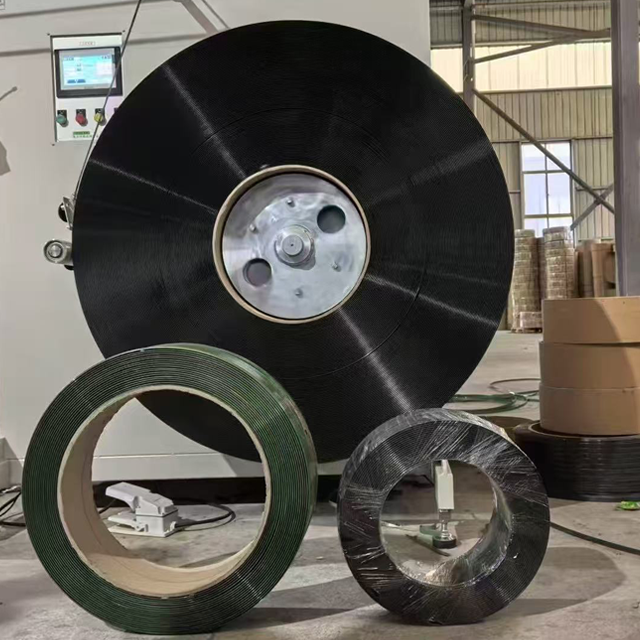
We must aggressively ignore manufacturer marketing claims. Let us focus entirely on applied physics and actual field realities. Real-world conditions ruthlessly expose weak packaging materials.
Understanding physical material properties prevents catastrophic load failures. Break strength simply measures how much brute force snaps a strap. However, elongation metrics matter much more in practical logistics. Elongation defines exactly how far a material stretches under tension. Elongation recovery describes how much of that deformation is recovered after the load or tension changes.
PP stretches quite easily under moderate stress. It generally exhibits greater permanent deformation and tension loss under sustained loading than PET.As PP undergoes prolonged loading, the resulting deformation can reduce the strap's ability to maintain consistent restraint around the load.
Conversely, PET provides controlled elongation and better elastic recovery than PP. It stretches slightly upon initial impact. It absorbs heavy kinetic shock during rough transit. Crucially,it can recover a portion of its elongation and maintain more consistent restraint during transient load changes. This can help maintain load containment during sudden truck stops or severe road turbulence.
Logistics experts constantly fight an invisible enemy called "creep." Creep describes the gradual, time-dependent deformation of a material under sustained load, while stress relaxation describes the reduction in tension that can occur over time when a material is held at a given strain. Both behaviors can contribute to a reduction in retained strapping tension.
PP generally experiences greater creep and stress relaxation than PET, particularly under sustained loads and elevated temperatures.The amount of tension loss depends on factors such as strap grade, initial tension, temperature, load conditions, and time.
PET offers vastly superior sustained tension capabilities. It resists creep exceptionally well under heavy strain. You can confidently store securely bound pallets for weeks or even months. The bands remain remarkably tight. This sustained holding force proves absolutely critical for extended transit periods and complex supply chains.
Warehouse environments rarely maintain perfect, climate-controlled conditions. Many industrial facilities store bundled pallets in harsh outdoor yards. Transport trucks routinely expose freight to extreme temperature fluctuations. We must carefully evaluate material weather resilience.
PP can be affected by prolonged UV exposure, particularly when the strap is not formulated with adequate UV stabilizers. Extended sunlight exposure can reduce its strength and impact resistance over time. Cold temperatures can also affect its impact resistance.
PET can also degrade under prolonged UV exposure, although properly formulated PET strapping can provide good weather resistance for outdoor applications. Actual performance depends on the resin grade, additives, and exposure conditions.
Material Performance Profile Comparison
Performance Metric | Polypropylene (PP) | Polyester (PET) |
|---|---|---|
Elongation Recovery | Poor (Prone to sagging) | Excellent (High shock absorption) |
Tension Decay (Creep) | High (Loses tension quickly) | Low (Retains tension long-term) |
UV Resistance | Low (Becomes brittle in sunlight) | High (Stable in outdoor storage) |
Best Load Type | Light to medium, uniform | Heavy, rigid, expanding |
High-performance load containment requires incredibly robust solutions. Bottom-of-funnel buyers actively seek heavy-duty alternatives to traditional, outdated materials. PET Strapping completely dominates this exact solution category. Engineers designed it specifically for the most demanding, high-stress logistics scenarios imaginable.
You should deploy this advanced material for highly specific applications.
Heavy Palletizing: Securing dense, stacked consumer goods for cross-country, long-haul transport.
Brick and Block: Bundling extremely heavy construction materials prone to severe shifting.
Lumber and Timber: Containing aggressively expanding and contracting organic wood loads.
Metals: Bundling heavy steel pipes, aluminum extrusions, and massive metal coils safely.
International Shipping: Surviving turbulent ocean freight conditions and extended global port storage.
We must address procurement costs transparently. Yes, polyester carries a noticeably higher upfront cost than standard PP. However, evaluating materials purely on price per foot creates dangerous blind spots. Its true return on investment becomes completely obvious when replacing steel banding. Traditional steel poses severe operational risks. It rusts quickly and ruins pristine product packaging. It snaps violently under pressure, causing severe worker lacerations. Moving to high-tensile plastics permanently eliminates these daily dangers. You prevent costly rust damage entirely. You protect your valuable workers from sharp, recoiling metal edges. You achieve equivalent, reliable holding strength safely. This strategic transition represents mature, risk-aware logistics planning at its finest.
We absolutely do not dismiss PP entirely. It functions perfectly as an economical, daily workhorse. You simply must use it exclusively in highly controlled environments. Misapplication causes the vast majority of warehouse strapping failures. Understanding its firm limits ensures operational success.
Consider these highly strategic use cases for optimal performance:
Corrugated Box Bundling: Securing light, uniform cardboard boxes for standard shipping.
Lightweight Parcel Securing: Grouping small, manageable packages for rapid last-mile delivery.
Newspaper and Print: Bundling high-volume periodicals for immediate regional distribution.
Intra-Facility Transport: Moving lightweight items short distances within a single, controlled warehouse.
We must outline extremely clear boundary lines here. You risk significant product damage if you deliberately ignore these rules. Never use PP for heavy, dynamically shifting pallets. Do not ever use it on sharp-edged industrial freight. PP simply cannot handle dynamic, heavy loads safely. Relying on it to secure rigid, heavy freight represents a massive false economy. The material stretches entirely too much. The load will inevitably shift. Catastrophic damage will absolutely occur. You save a few pennies on the roll but lose thousands in damaged goods. Transparent assumptions about fundamental load physics easily prevent these costly mistakes.
Switching packaging materials always introduces temporary operational friction. You cannot simply swap plastic rolls and expect immediate, flawless success. Tooling compatibility requires careful, deliberate assessment. PP and PET possess fundamentally different physical characteristics. They almost always demand entirely different manual tools.
For example, hand tensioners must handle vastly specific tensile strengths. Sealers require highly precise crimping mechanisms to function. Modern battery-operated friction-weld tools use different baseline sealing temperatures. Using improper tools guarantees structurally weak seals and immediate load failure. Always audit your current hardware thoroughly before changing consumables.
High-volume automation requires even stricter technical scrutiny. High-speed arch machines process light bands incredibly rapidly. Conversely, a dedicated PET strapping machine applies massive, sustained tension to heavy loads. These advanced systems use highly robust internal components. They safely handle much higher friction and tension thresholds. You must ensure your automated machinery matches your chosen material precisely.
Safety and regulatory compliance also heavily drive implementation decisions. Standardizing on high-grade plastics drastically improves overall warehouse safety metrics. Floor operators suffer far fewer serious injuries compared to handling steel. Furthermore, 2025 global sustainability trends heavily influence corporate procurement. Many modern polyester options now feature 100% post-consumer recycled materials. This directly supports stringent ESG (Environmental, Social, and Governance) compliance initiatives. You dramatically improve safety while seamlessly meeting corporate sustainability goals.
Busy operations managers need extremely clear, rapid decision frameworks. Complex, convoluted charts often confuse the fast-paced procurement process. We built a highly practical, logical shortlisting checklist. Apply these simple IF/THEN rules directly to your daily operations.
If your load is relatively light, uniform, stable, and does not require high sustained tension -> Evaluate PP.
If your load is heavy, rigid, dynamically shifting, or requires higher strength and long-term tension retention -> Evaluate PET Strapping.
If you currently use dangerous steel banding but urgently want to eliminate safety risks -> Evaluate PET Strapping.
You need highly actionable next steps today. Start by auditing your current strapping failures systematically. Walk your active receiving docks carefully. Look specifically for loose, sagging bands on arriving pallets. Check closely for thin straps digging deeply into corrugated corners. These glaring visual cues clearly indicate severe tension decay or improper material selection.
Next, document the exact weight and physical dimensions of your typical pallet. Calculate your absolute maximum transit distance accurately. Finally, boldly request material samples from a trusted, verified supplier. Demand rigorous machine compatibility tests before committing to large bulk orders. Real-world physical trials validate your bundling strategy effectively.
Choosing the absolute right packaging material remains a critical engineering decision. You must base this important choice entirely on actual load physics. The overall length and complexity of your supply chain also dictate material requirements. We absolutely cannot rely on outdated guesswork or habit.
Mature, effective logistics planning always prioritizes predictable holding force. Long-term load recovery matters far more than initial roll cost. Protecting your valuable products ensures high customer satisfaction and fiercely protects profit margins. High-performance plastics provide the exact necessary reliability for demanding modern supply chains.
Take immediate, decisive action to secure your freight today. Contact a certified, experienced packaging specialist immediately. Ask them to calculate your specific load containment requirements accurately. Conduct a thorough, data-driven operational audit on your warehouse floor. Proper, meticulous planning today prevents catastrophic load failures tomorrow.
A: Generally, no. PET requires significantly higher tension capabilities. It also demands different sealing temperatures and friction levels. Running incompatible materials causes frequent jams and dangerously weak seals. Always verify specific equipment specifications and consult your machinery manufacturer before switching consumable materials.
A: Yes, high-tensile PET can comfortably match or exceed the working strength of standard steel for many applications. It also provides a critical added benefit. It offers elongation recovery. This vital shock absorption prevents the band from snapping during sudden impacts, a structural feature steel lacks entirely.
A: This happens because of rapid tension decay, commonly known in logistics as creep. PP loses a significant percentage of its holding force shortly after application. It remains completely unsuitable for loads that settle or require long transit times. Switching to polyester permanently solves this sagging problem.


