

close
Choose Your Site
Global
Social Media
Views: 0 Author: Site Editor Publish Time: 2026-08-19 Origin: Site


Securing palletized loads requires precise alignment between packaging materials and load physics. Every day, shipping facilities send thousands of pallets into transit. They rely on strapping to keep products entirely intact. When packaging forces mismatch the load requirements, the results quickly become catastrophic. Over-speccing unnecessarily drives up your daily consumable costs. Meanwhile, under-speccing creates unacceptable risks of load shift, product damage, and major safety compliance failures. Operations managers face a constant balancing act between material efficiency and absolute load security. This article provides a technical, evidence-based framework for evaluating strapping specifications. We will specifically explore how to optimize width, thickness, and breaking strength for your unique operations. You will learn how to match these vital dimensions to specific load profiles and machinery constraints. Ultimately, you will discover actionable methods to improve packaging stability while maintaining cost-efficiency across your entire supply chain.
Systematic Evaluation: Optimal PET strapping selection requires evaluating the required strap strength and tension based on pallet weight, load characteristics, transit conditions, securing configuration, and appropriate safety factors, rather than defaulting to legacy specifications.
Dimensional Impact: Width helps distribute pressure across the load and affects the strap's load-bearing capacity, while thickness contributes to overall strength, stiffness, and elongation characteristics.
Equipment Alignment: Specifying the correct strapping dimension is intrinsically linked to the capabilities of existing manual, semi-automatic, or fully automated strapping machinery.
Application Matching: Rigid, heavy, or settling loads require different tensioning properties to mitigate tension creep during prolonged transit.
Operations often fall into the trap of over-engineering their packaging. You waste valuable material when using a 19mm high-thickness strap if a standard 16mm strap suffices. This practice immediately inflates your operational expenditure per pallet. Multiply this minor waste across thousands of shipments, and your consumable budget balloons. Companies frequently adopt overly robust specifications simply because they fear load failures. However, scientific specification ensures you only pay for the tensile strength you actually need.
Conversely, the risks of under-speccing carry severe operational penalties. Insufficient breaking strength directly leads to strap failure under dynamic transit stress. Once a truck brakes hard, turns sharply, or experiences severe road vibration, weak straps snap. The remaining straps then absorb the redistributed shock, causing a cascading failure mechanism. A collapsed pallet ruins your inventory and damages your brand reputation.
We must also consider strict compliance and safety mandates. Logistics networks enforce rigid rules regarding load securement. If a load fails during domestic or international shipping, you face significant logistical liabilities. Fines for unsecured loads can be steep. Furthermore, a shifting pallet poses severe physical danger to forklift operators and warehouse staff during unloading. Proper specification acts as your primary insurance against these preventable logistical disasters.
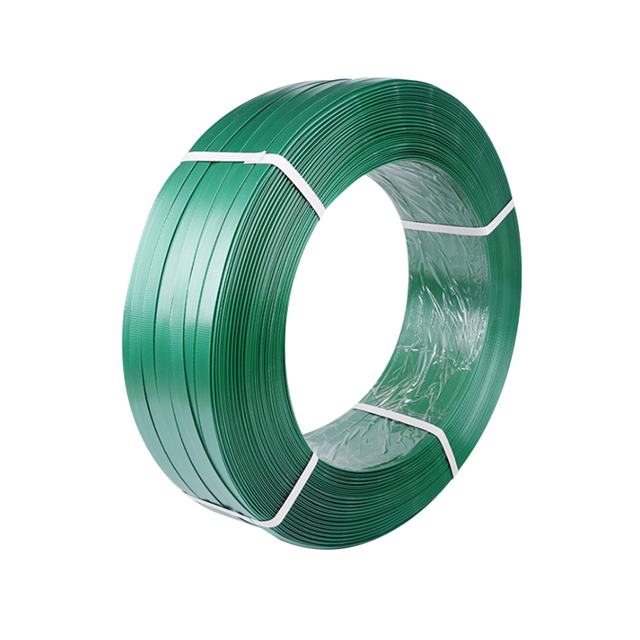
Many warehouse professionals confuse breaking strength with operational tension. Breaking strength represents the absolute failure point. Manufacturers measure this metric in pounds or Newtons. It tells you exactly when the material will snap under perfect laboratory conditions. You should never operate anywhere near this absolute limit.
Instead, you must calculate the Working Load Limit (WLL). Standard industry practice demands a strict safety factor formula. Here is how you calculate the required strength for your pallets:
Determine the total maximum weight of your fully loaded pallet.
Assess the expected static and dynamic forces acting on the load and determine an appropriate design or safety factor based on the specific application and applicable load-securing requirements.
Determine the required strap strength and tension based on the load configuration, number and arrangement of straps, and the strength of the weakest component in the securing system.
This final number dictates the exact breaking strength each strap must possess. However, transit methods heavily influence your safety factor choice. You must differentiate between static and dynamic loads. Static loads sit peacefully in a warehouse. Dynamic loads endure severe G-forces. Rail transport involves intense shunting shocks. Sea freight introduces prolonged swaying. Long-haul trucking creates constant vertical vibration. You must increase your safety factor coefficient whenever facing aggressive dynamic forces.
The elongation and recovery characteristics of strapping vary with material grade, strap dimensions, initial tension, temperature, and test conditions. Controlled elongation can help accommodate transient load movement, while good elastic recovery can help maintain restraint after temporary deformation. However, strapping should not be assumed to absorb all impact energy, and some permanent deformation may occur under sustained or high loads.
You must balance two critical dimensions: width and thickness. Each parameter serves a distinctly different mechanical purpose.
Width typically ranges from 9mm to 25mm. Wider straps effectively distribute holding tension across a much larger surface area. This broad distribution prevents the strap from cutting into soft packaging. If you ship products in corrugated boxes, narrow straps often crush the cardboard edges. Wider straps mitigate this damage. Sometimes, you can avoid excessively wide straps altogether. Adding rigid edge protectors allows you to use narrower, cheaper straps while maintaining perfect load integrity.
Thickness generally spans from 0.5mm to 1.27mm. This dimension correlates directly with structural rigidity. Thicker straps provide superior maximum retained tension. They hold heavy, shifting loads relentlessly tight. However, a distinct trade-off exists. Thicker straps lose flexibility. If you package uniquely shaped loads containing complex contours, overly thick straps struggle to conform tightly to the irregular surfaces.
Understanding these variables helps you navigate the dimensional matrix. Specific combinations yield vastly different performance outcomes for comparable costs. A wider but thinner strap excels at protecting soft boxes. A narrower but thicker strap excels at locking down rigid, heavy materials.
Dimension Ratio | Mechanical Focus | Primary Benefit | Ideal Application |
|---|---|---|---|
16mm x 0.8mm | Balanced rigidity | High retained tension | Standard industrial pallets |
19mm x 0.6mm | Surface area distribution | Prevents edge crushing | Corrugated boxes & cartons |
19mm x 1.0mm | Maximum tensile limit | Resists sharp edge cuts | Heavy construction materials |
12mm x 0.5mm | High flexibility | Conforms to irregular shapes | Lightweight bundled goods |
Your product's physical behavior dictates your packaging strategy. We categorize industrial shipments into three primary load profiles. Each demands specific tensioning properties to mitigate tension creep during prolonged transit.
Materials like bricks, stamped metals, and ceramic tiles represent rigid loads. These unyielding masses do not compress. They often feature sharp, abrasive edges. For these applications, you require exceptionally high breaking strength. You should prioritize thicker dimensions. Thick straps resist the cutting action of sharp metal edges during transit vibration. They lock unyielding mass tightly to the wooden pallet base.
Baled textiles, compressed foam, and bulk agricultural products act as expanding loads. You compress these materials mechanically before applying the strap. Once released, the load constantly attempts to expand outward. This outward pressure never stops. You demand strong elongation recovery here. The strap must maintain constant, unyielding tension as the compressible material pushes violently against it.
Lumber stacks, bagged cement, and bottled beverages behave as settling loads. These items contain trapped air or subtle gaps during initial packaging. As trucks vibrate down the highway, the items nest closer together. The overall footprint of the load physically shrinks. Settling loads rely entirely on high retained tension. The material must actively contract as the load settles. If the strap lacks elastic memory, it will hang loosely around the shrunken pallet, leading to immediate load failure.
Specifying the perfect strap dimension solves only half your problem. You must align your material choice intrinsically with your hardware capabilities. Strapping heads and friction-weld sealers operate under strict mechanical tolerances. You cannot simply load a heavier strap into a standard machine.
Running a 19mm strap through a machine precisely calibrated for a 12mm profile causes immediate disaster. The oversized material jams the feed wheels instantly. It burns out drive motors and accelerates hardware wear exponentially. You must consult your equipment manuals before changing consumable specifications.
Hand tools and automated systems handle these variables differently. Manual or battery-operated hand tools offer higher flexibility. They easily accommodate slightly varying strap sizes. However, manual tools remain entirely reliant on operator consistency. A tired worker might under-tension a critical heavy load at the end of their shift.
Fully automated lines present a different challenge. If you feed material through an inline PET Strapping Machine, you require strict adherence to dimensional tolerances. Automated arches demand high-quality camber. Camber refers to the straightness of the strap as it unwinds. Excessive curvature causes misfires inside the feed chute, halting your entire production line.
We highly recommend a disciplined shortlisting logic for any material rollout. Never purchase a full truckload of new material blindly. Instead, pilot test two or three distinct specifications. Run these test pallets on a vibration table or a tilt testing machine. Evaluate how the load behaves under simulated transit stress before approving a full procurement rollout.
Choosing the correct strapping dimensions ensures your products arrive safely without inflating consumable budgets. You must adopt a systematic evaluation process rather than relying on guesswork. First, calculate your exact Working Load Limit based on pallet weight and dynamic transit shocks. Next, assess your specific load type to determine if you need edge protection or high elongation recovery. Always verify your chosen dimensions against your machinery's hard mechanical tolerances. Finally, run rigorous pilot tests on sample pallets to validate your math in the real world. We strongly encourage you to consult a dedicated packaging specialist today. Ask them to audit your current containment metrics and request several sample rolls for immediate operational testing.
A: Heavy-duty PET matches the breaking strength of standard light-duty steel. A 19mm high-tensile plastic strap easily replaces standard steel bands for many heavy applications. Furthermore, plastic offers superior shock-absorption capabilities. While steel snaps under sudden transit impacts, plastic stretches and recovers, keeping the load secure.
A: Feeding excessively thick material causes severe mechanical risks. It quickly damages delicate feed wheels and misaligns internal cutting knives. You will also experience incomplete friction welds, as the machine cannot generate enough heat to melt the thicker polymer. This drastically increases your daily equipment downtime.
A: Yes, extreme temperatures impact performance. Plastic retains its structural integrity well in standard climates. However, prolonged exposure to extreme heat causes the polymer to relax, reducing retained tension. Conversely, freezing temperatures can increase brittleness. You should store rolls in climate-controlled environments before application.
A: You can perform practical evaluation methods on your shipping dock. Inspect your delivered pallets for edge-crush damage, which indicates overly narrow straps. Measure the retained tension with a tension meter 24 hours after application to check for creep. Finally, conduct controlled drop tests to verify load stability.


